
Renewable Growth Is Accelerating — but Storage Is Now the Real System Question
Renewable scale is no longer the main question
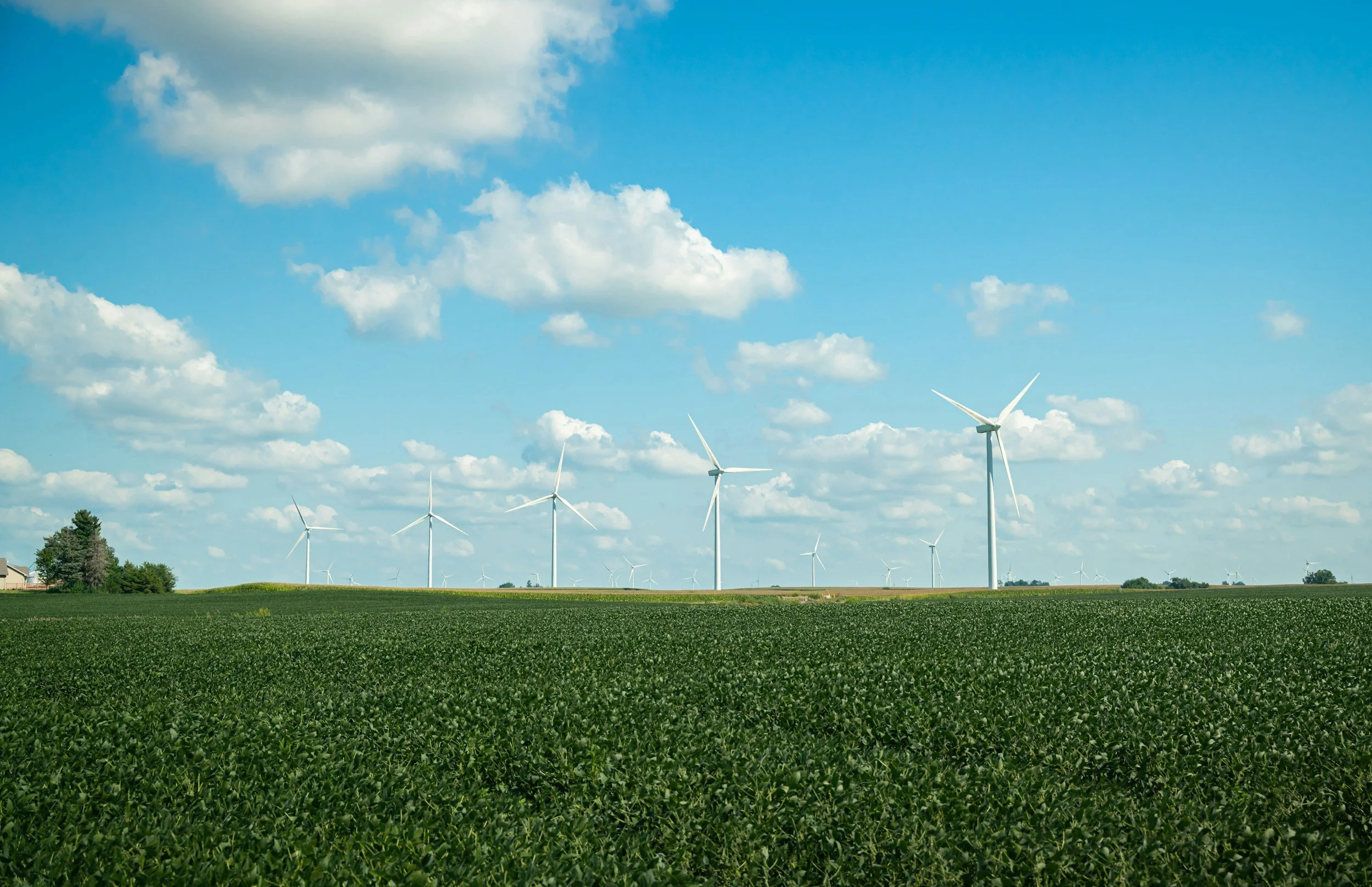
The global renewable energy story has changed. The market is no longer trying to prove that solar and wind can scale. That proof has already arrived. IRENA reported that the world added 585 GW of renewable power capacity in 2024, bringing total renewable capacity to 4,448 GW, with renewables accounting for the large majority of total power expansion in that year. Those are extraordinary numbers. They tell us that clean generation is not a fringe phenomenon or a slow-moving experiment. It is now a central engine of new electricity capacity growth.
But success in generation changes the shape of the next challenge. Once renewable deployment becomes large enough, the central question is no longer only how much clean electricity can be added. It becomes how effectively that electricity can be turned into reliable, usable infrastructure. This is where storage and flexibility move to the centre of the conversation.
Why variability turns storage into a system question
Solar and wind are powerful technologies, but they are variable by nature. Output depends on resource availability and timing. As renewable penetration rises, that variability matters more at system level. Electricity systems need to absorb surplus generation when it is abundant and deliver dependable supply when conditions change. They need to respond to peaks in demand, changing weather and operational stress. Storage is not simply an accessory to renewable growth. It is increasingly one of the things that determines whether renewable growth can achieve its full value.
The IEA has been explicit that flexibility measures become more important as variable renewable shares increase. Demand response, grids, storage and other balancing tools are all part of the answer. The agency's analysis of renewable integration makes clear that inadequate flexibility infrastructure creates a real risk of curtailment — surplus generation that cannot be absorbed and therefore cannot contribute to displacing fossil fuels. The more ambitious the renewable build-out, the more pressing that risk becomes.
Storage is therefore a structural issue, not a niche technical preference. Its importance grows in direct proportion to the scale of the renewable transition itself.
Why the wider power system makes this more urgent
This shift is becoming more urgent because electricity demand is rising quickly. The IEA reports that global power demand grew by 4.3% in 2024 and expects strong growth to continue. Electrification is expanding across transport and industry. Cooling demand is increasing. Data centre demand is rising quickly as digitalisation and AI intensify — the IEA projects data centre electricity consumption to roughly double to around 945 TWh by 2030 in its base case.
The world is not only adding more renewable capacity. It is also asking the power system to do significantly more. In that environment, flexibility becomes more valuable because reliability becomes harder to deliver without it.
A future grid with more renewables and more demand is therefore also a future grid with a much greater need for storage. Generation alone does not solve that challenge. Systems that can capture surplus power and release it when needed become increasingly important to how clean electricity is used in practice.
Where Tree Associates and AirBattery fit
At Tree Associates, we see this as the context in which energy storage becomes genuinely strategic rather than merely supplementary. AirBattery is Tree's modular compressed-air energy storage technology, designed to store excess renewable power and release it when supply is needed. It is built for resilience and long operational life, and is intended for deployment in environments where reliability matters as much as sustainability — including weak-grid, remote, industrial and resilience-led applications.
This is important because many users are no longer asking only for clean generation. They are asking how to make clean generation dependable under real conditions. A storage technology in these contexts is not balancing a theoretical grid model. It is helping real sites operate more securely, with less dependence on fossil-fuel backup or fragile network infrastructure.
The value case for storage is also broadening. As renewable penetration increases and the power system becomes more complex, operators across industry, infrastructure and utilities increasingly need storage solutions that are matched to the specific demands of their environment — not just solutions optimised for a single grid service or market structure. Fit matters as much as specification.
Why this is a stronger narrative for Tree to own
For Tree Associates, the phrase storage is now the real system question is strategically valuable because it places AirBattery inside a major macro trend rather than inside a narrow product comparison. It positions Tree as responding to the next serious challenge created by renewable success itself — which is a strong place to be.
It also allows Tree to speak not only about storage as a product category, but about why the transition now depends on making renewable power more usable. That is a more substantive conversation and a more relevant one for the industrial, infrastructure and policy audiences the company is best placed to reach.
At Tree Associates, we believe the next phase of the energy transition will be shaped not only by how much renewable energy is built, but by how well the surrounding system can absorb, balance and rely on it. Storage sits much closer to the heart of that challenge than it once did. Renewable growth is accelerating, but the real question now is how the system turns that growth into dependable performance.
Closing thought
Renewable generation has proven itself. The next challenge is making that generation dependable. At Tree Associates, AirBattery is our response to that challenge — storage designed for the real conditions where reliability matters most.
